
What is a blockchain?
A blockchain is a shared digital record of transactions, stored in linked blocks on many computers, with no single company or bank in charge.
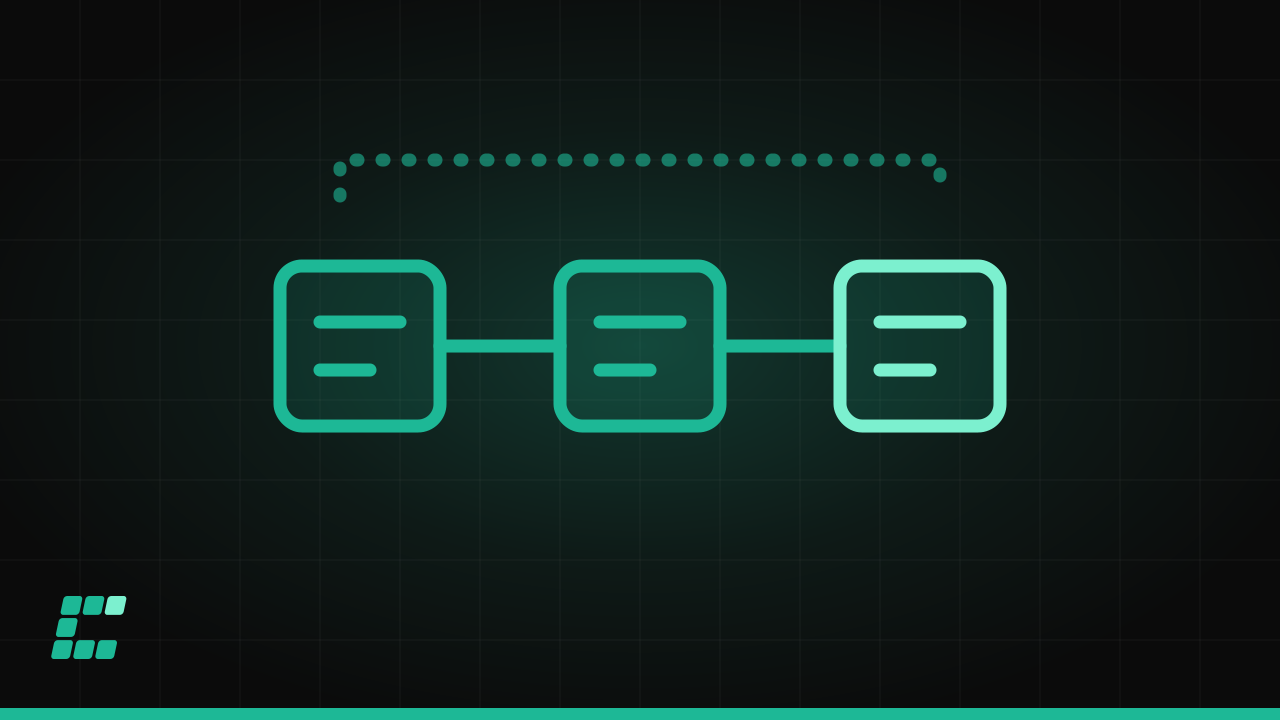
A blockchain is a shared digital record of transactions that is stored on many computers at once. New entries are bundled into blocks, and each block is locked to the one before it, forming a chain. No single company, bank or government keeps the master copy.
What is a blockchain in simple words?
Picture a notebook that thousands of people hold identical copies of. Whenever someone makes a payment, a new line is written into every copy at the same time. Nobody can tear out a page or rewrite an old line, because all the other copies would show the change.
That notebook is a ledger, a record of who owns what. A blockchain is a ledger kept by a network instead of by one institution. The computers that hold the copies are called nodes.
Why is it called a blockchain?
Transactions are not added one at a time. They are collected into batches called blocks. Each block carries a hash, a short digital fingerprint calculated from its contents, and it also carries the fingerprint of the block before it.
Those fingerprints are the links in the chain. If anyone altered an old transaction, the fingerprint of that block would change and no longer match the one stored in the next block. Every later block would break too, and the rest of the network would reject the altered copy.
Who is in charge of a blockchain?
On a public blockchain such as bitcoin or Ethereum, nobody is. Anyone can download the software, hold a copy of the record and check it. The network decides which new block to accept through a set of rules called a consensus mechanism, which rewards participants for following the rules and makes cheating expensive.
This is what people mean by decentralized. There is no head office that can freeze an account, reverse a payment or switch the system off. Some companies run private blockchains where only approved members take part, which trades that openness for control.
The first blockchain was bitcoin, which began running in January 2009. Thousands have been launched since, including Ethereum in 2015, which added the ability to run programs called smart contracts.
What are the drawbacks?
A blockchain is slower and more costly to run than an ordinary database, because thousands of computers must store and check the same data. Fees can rise sharply when a network is busy.
The permanence cuts both ways. A payment sent to the wrong address or to a fraudster usually cannot be reversed, and there is no help desk to call. Critics also point out that many projects described as blockchain solutions would work as well on a normal database run by a trusted party. The technology is most useful where the people sharing a record do not trust any one of them to keep it.
This guide explains how things work. It is not financial, legal or tax advice. Last updated .