
Hard fork vs soft fork
A soft fork tightens a blockchain's rules while staying compatible with old software. A hard fork breaks compatibility and can split the chain in two.
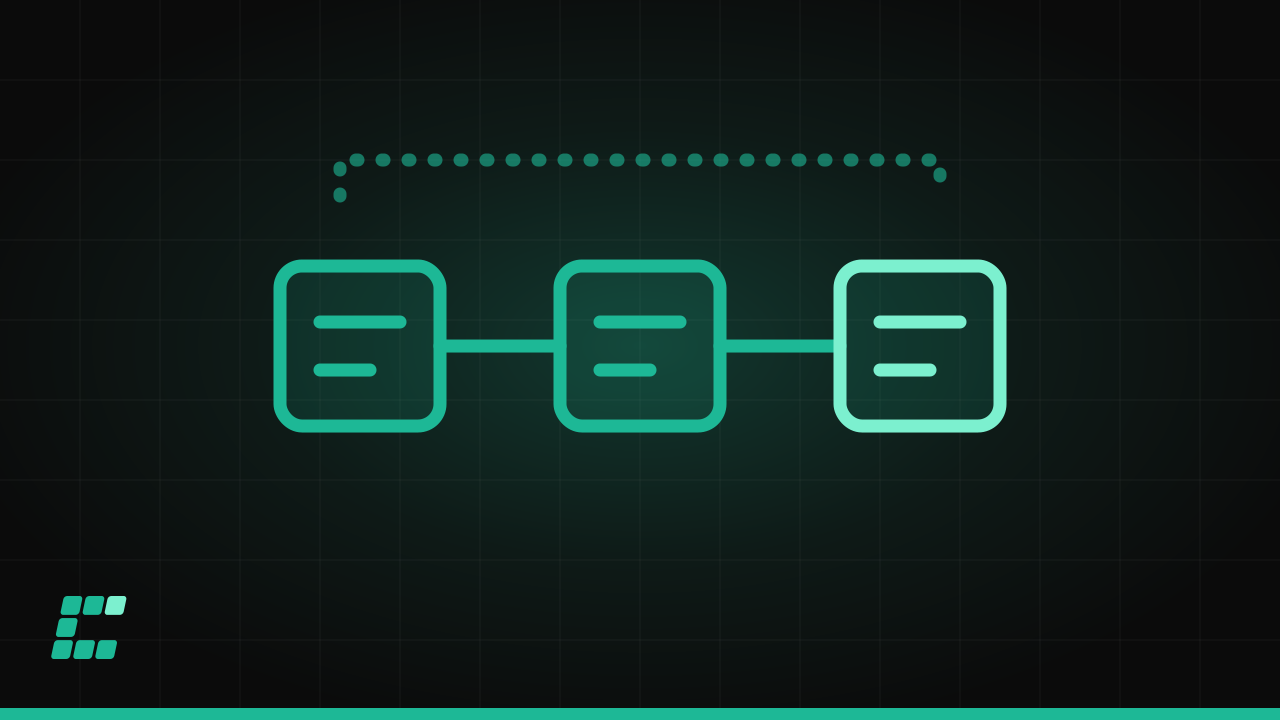
A fork is a change to the rules a blockchain follows. A soft fork tightens the rules in a way that older software still accepts. A hard fork changes them in a way that older software rejects, so everyone must upgrade or the chain splits in two.
Why do blockchains fork?
An ordinary app is updated by the company that owns it. A public blockchain has no owner. Its rules live in software run by thousands of independent computers called nodes, and a change takes effect only if the people running them install it.
Developers propose changes in public, the community argues over them, and those who agree adopt the new software. This is one consequence of decentralization.
What is the difference between a soft fork and a hard fork?
A soft fork makes the rules stricter. Blocks produced under the new rules still look valid to computers running the old software, so the network stays in one piece.
Bitcoin has generally been changed this way. Segregated Witness, which rearranged how transaction data is stored, took effect in August 2017. Taproot, which changed how signatures work, followed in November 2021.
A hard fork loosens or rewrites the rules so that new blocks are invalid under the old software. Anyone who does not upgrade is left behind.
If everyone upgrades, the chain simply carries on. Ethereum's scheduled upgrades are hard forks of this kind, including its move to proof of stake in September 2022. If a sizable group refuses, the result is two separate blockchains with a shared history up to the point of the split, and two separate coins.
Which chain splits are the best known?
- Ethereum Classic, 2016. A hacker drained millions of ether from an investment fund called The DAO. In July 2016, most of the Ethereum community backed a hard fork that returned the money. A minority objected to rewriting the record and kept the original chain going as Ethereum Classic.
- Bitcoin Cash, 2017. After years of argument over whether to raise the limit on the size of each block, one camp split off on August 1, 2017 with larger blocks, creating Bitcoin Cash.
What happens to coins in a split?
Anyone who held coins before a split holds the same balance on both chains afterward, because the two share a history. Whether the new coin can actually be used depends on wallets and exchanges choosing to support it, and its price is set by the market separately from the original.
Splits also attract fraud. Fake websites offering to help people claim forked coins have been used to steal private keys.
Critics draw a wider lesson. The DAO fork showed that a ledger described as unchangeable can be changed when enough participants agree, and the bitcoin dispute showed how long and bitter governance without a central authority can be.
This guide explains how things work. It is not financial, legal or tax advice. Last updated .